


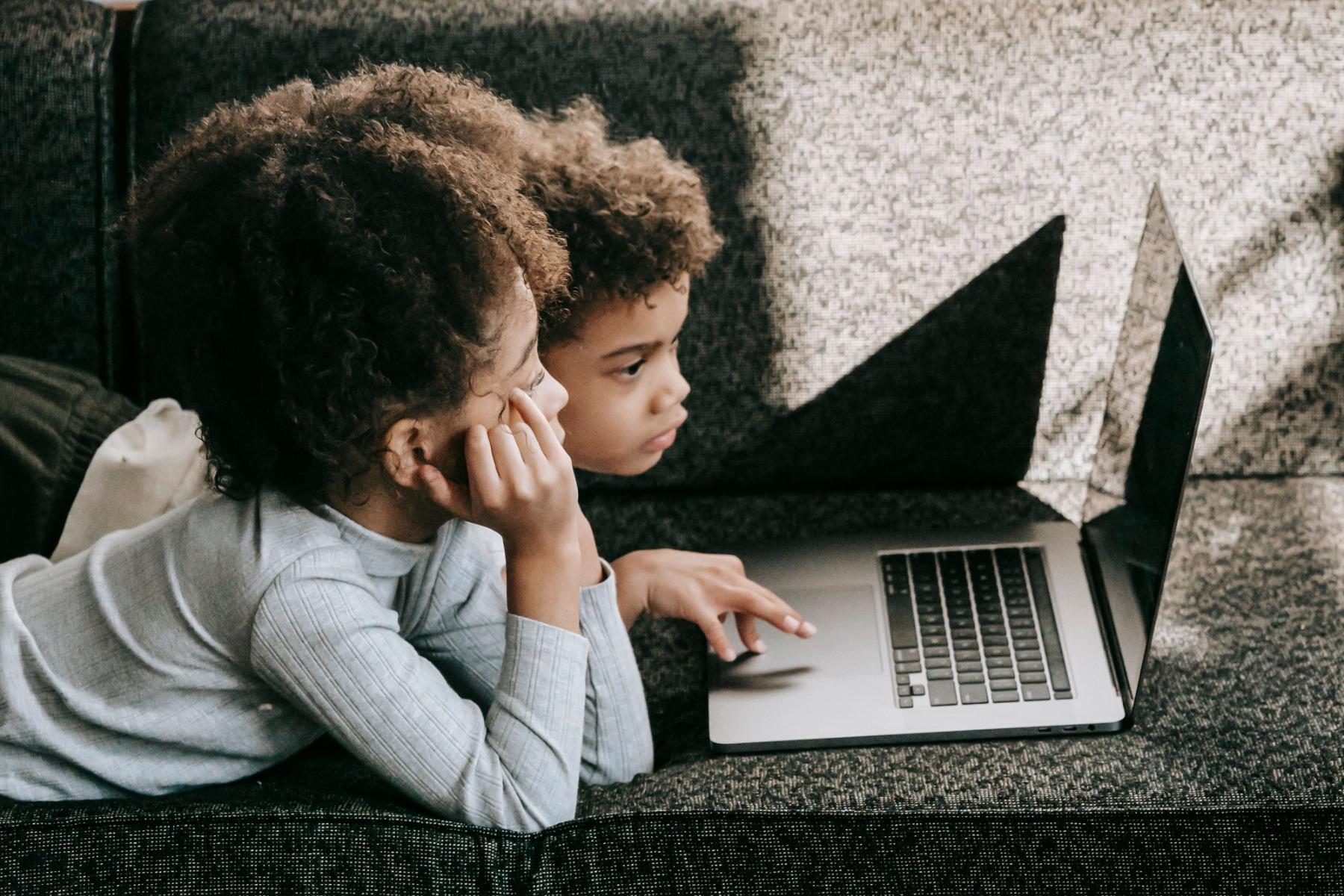
Let's be honest. Some parents are perfectly happy letting their children explore ChatGPT. Others would rather their children stay as far away from it as possible. And some are still trying to understand what ChatGPT actually does. Fair enough!
Artificial intelligence has found its way into our homes, classrooms and everyday conversations. Children are curious, and naturally, they want to know what all the fuss is about.
Some are using AI to ask questions, get homework help, write stories and explore ideas. Others have discovered that a chatbot can produce an entire essay in seconds. (Now, that's where things can get interesting!)
So, should children be using ChatGPT? It's worth having an honest conversation about it.
Children are growing up in a very different world
Think about the world we grew up in. The internet was exciting enough. Having Google answer a question in seconds felt like magic. Now, children can have conversations with AI, generate images, explore ideas and get explanations about almost anything.
It's fascinating, really.
And there's a lot children can learn from these experiences. AI can help explain unfamiliar topics, encourage curiosity and introduce children to creative possibilities they might never have considered.
Of course, we also need to acknowledge the concerns.
Some parents worry about inappropriate content, misinformation, privacy and the possibility of children becoming overly dependent on AI. These concerns are valid, especially when we're talking about young minds that are still developing.
But what happens when children start trusting everything AI tells them?
Here's something worth thinking about.
ChatGPT can give a very confident answer and still be completely wrong. It can misunderstand a question, invent information or present something inaccurate as though it's a well-established fact.
Adults sometimes struggle to recognise this. Imagine a child who is still learning how to evaluate information.
Children need to understand that AI makes mistakes. They should feel comfortable questioning its answers, checking information and asking where something came from.
And then there's homework.
We all know children love finding the easiest way to complete an assignment. Let's not pretend otherwise! Give a child a tool that can write an essay in seconds and, naturally, some will be tempted to let it do the work.
But what are they learning from that experience?
Writing, reasoning, problem-solving and creativity are skills that need practice. Children should have the opportunity to struggle with an idea, make mistakes and figure things out. That's part of learning.
And yes, AI can help write an entire article too. Rather convenient, isn't it? But somebody still needs to bring the ideas, ask the difficult questions and decide whether any of the answers actually make sense. AI hasn't quite earned the job of Chief Imagination Officer yet!
So, what should parents be doing?
First, understand the tools your children are interested in. You don't have to become an artificial intelligence expert overnight. Start by exploring the technology together.
Ask your child what they know about AI. Find out what they would like to use it for. Try a few age-appropriate activities together and discuss the answers it produces.
Talk about personal information, online safety and why they shouldn't believe everything they read online. These conversations matter.
Age is also important. OpenAI states that ChatGPT is not intended for children under 13. Users aged 13 to 18 require parental consent. In educational settings, any interaction involving children under 13 must be conducted by an adult.
You can read more in OpenAI's guidance on ChatGPT and age requirements.
UNICEF's Guidance on AI and Children explores important considerations around children's safety, privacy, development and participation in an AI-driven world.
For practical advice, Common Sense Media's guide to AI chatbots and children is another useful resource for parents and caregivers.
What should children actually learn about AI?
This is where AI literacy comes in.
Children need opportunities to understand how artificial intelligence works, what it can do, where it falls short and how to use it responsibly.
They should learn to ask good questions, recognise unreliable answers, verify information and develop their own ideas.
UNESCO's Guidance for Generative AI in Education and Research provides useful perspectives on human-centred, age-appropriate AI use in education.
At AMATA StoryBooks, these ideas influence how we're developing Lecoe Kids and our future Incubator Programme. We want children to explore artificial intelligence through stories, questions and creative activities, while developing the confidence to think independently.
We believe children should have room to experiment, make discoveries and turn their ideas into something meaningful. There's a whole world of possibilities to explore, and curiosity is a good place to start.
Let's keep the conversation going
AI is already part of the world our children are growing up in. Parents will have different views on when and how their children should interact with it, and those conversations are worth having.
Some will embrace it early, others will take a more cautious approach. Both perspectives deserve consideration.
We'd love to hear from you.
Do you allow your children to use ChatGPT or other AI tools? What has your experience been like? Are you excited about the possibilities, concerned about the risks, or somewhere in between?